From Outsourcing to Orchestrating: The Clinical Mesh Playbook for Optimized Clinical Trial Outsourcing
Updated: Feb 18
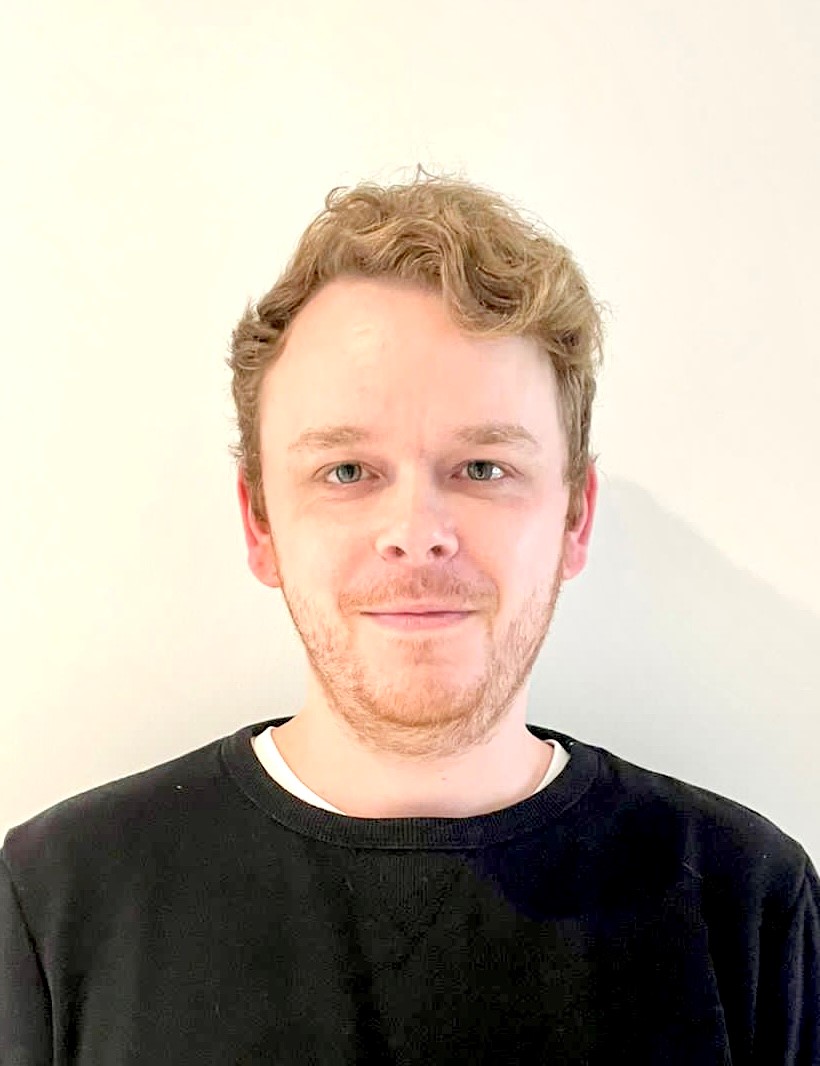
How can sponsors move beyond traditional clinical outsourcing to orchestrate faster, more flexible studies? Live from COG Europe in Amsterdam, Maria Expósito Lorido, Venture Partner at Vu Venture Partners, breaks down the “clinical mesh” model—a new approach to study architecture that promises greater agility, oversight, and value for sponsors, CROs, and biotech leaders navigating today’s complex development landscape.
This article highlights insights from a keynote session delivered by Maria Expósito Lorido, Venture Partner at Vu Venture Partners, during the Clinical Outsourcing Group (COG) Europe meeting in Amsterdam. With deep experience in clinical operations and venture capital, Maria brings a sharp, technical perspective to the pressing challenges sponsors face when structuring and optimizing their clinical trial outsourcing models.
The session, “From Outsourcing to Orchestrating: The Clinical Mesh Playbook,” examines how sponsors and operational leaders can rethink vendor relationships, sourcing strategies, and internal capabilities—learning from both successful “platform” companies and the real-world constraints of drug development.
Why Rethink Clinical Trial Outsourcing? Setting the Stage
Clinical development environments are evolving rapidly, with increasing demands for speed, agility, and patient-centricity. As Maria Expósito Lorido outlined, traditional models of managing clinical trial outsourcing—whether via full-service CROs or functionally siloed partnerships—are hitting limits as study designs, regulatory requirements, and innovation cycles accelerate.
Statistics referenced in the session demonstrate the challenge: around 80% of clinical studies fail to meet their recruitment targets, with nearly 30% of enrolled patients eventually dropping out. Each day of study delay costs sponsors, on average, $600,000—not to mention the opportunity cost of delaying access to novel therapies. Given the stakes, sponsors must ask not just “Which CRO should we use?”, but “How can we design the most effective sourcing architecture for each study and our overall pipeline?”
Models of Clinical Outsourcing: From Pipelines to Platforms
Maria Expósito Lorido introduced a comparative framework for understanding clinical outsourcing architectures, referencing both industry practices and high-value models from adjacent sectors.
She contrasts three primary approaches:
Full-Service Integrated CRO
Best suited for complex, late-stage, global studies where sponsors have limited internal infrastructure, this model centralizes responsibilities in a single provider. While it offers simplicity and the ability to leverage established networks, it often comes with high costs, slower response times to issues, and challenges in vendor replacement. Change order “fatigue” and reduced flexibility also emerge as weaknesses, especially in innovation-driven or rapidly evolving programs.
Functional Service Provider (FSP) or Hybrid Sourcing
Here, sponsors retain leadership over study design and oversight, outsourcing specific functions or geographies to specialized CROs or vendors. This approach can be more flexible and cost-effective, maintaining internal strategic control while leveraging targeted external capabilities. Challenges include the increased burden of integrating multiple partners, potential quality or responsibility gaps, and the need for clearly defined interfaces and integrated action plans.
The Clinical Mesh Model
The “clinical mesh” approach is an emerging, platform-inspired model. Instead of fixed, linear processes or monolithic vendor arrangements, sponsors assemble a bespoke network of specialized partners for each study—drawing on the right capabilities, geographies, and technologies as needed. This mesh is woven together by strong internal orchestration and a focus on data fabric and integrated governance.
This model is especially advantageous for early- or mid-stage, innovation-heavy studies that demand speed and adaptability. While it introduces new challenges—such as increased orchestration complexity and heightened oversight responsibilities for sponsors—it offers improved agility, cost efficiency, and lessons from best-in-class technology companies that build platforms, not just pipelines.
Clinical Mesh in Practice: Design, Implementation, and Metrics
To illustrate the mesh approach, Maria Expósito Lorido presented an early-stage oncology case study. Instead of defaulting to a full-service CRO (estimated cost: $11.5 million, 52-week enrollment, 45% screen failure rate), the sponsor retains internal leadership (program lead, medical monitor, data lead), partners with an external recruitment vendor, and sources biometric/data and analytics partners individually—all connected through a centralized data layer.
Key results of this orchestration:
23% faster enrollment than the global CRO approach
~20% cost savings compared to fully outsourcing to a CRO
Reduced screen failure rates due to better-targeted recruitment and oversight
Importantly, Maria emphasized that this approach does not mean sponsors are simply “managing more vendors.” Instead, they are strategically composing capabilities with aligned quality management systems, risk management foundations, and central oversight of data integrity, cybersecurity, and safety.
Critical components for execution include:
Centralized data spine and governance framework
Defined KPIs (cost per qualified patient, time to first contact, screen failure rates, retention, protocol adherence)
Risk-based quality management and sponsor-owned safety governance (e.g., DSMBs)
Standardized vendor onboarding and cross-partner inspection readiness
The mesh model relies on a composed ecosystem: sponsors retain strategic assets and oversight, while partners contribute specialized capabilities, all visible in real time.
Building Mesh Capabilities: A 90-Day Roadmap
For organizations ready to pilot this platform-inspired model, Maria laid out a practical, stepwise approach for the first 90 days:
Weeks 1–4:
Map and prioritize internal vs. external capabilities.
Assign sourcing architecture for the next 2–3 studies.
Define success criteria and KPIs.
Weeks 5–8:
Select a pilot study (typically early-phase, moderate complexity).
Identify and onboard data and operational partners based on specific need.
Establish governance, risk, and quality management practices.
Weeks 9–12:
Review pilot performance, comparing mesh vs. traditional outsourcing setup.
Analyze results using predefined KPIs.
Document best practices, integration lessons, and decide where to extend or adapt the mesh model.
This measured, pilot-driven approach allows organizations to iterate, scale learning, and avoid the risks of an all-at-once transformation. Leadership, Maria argued, is less about “buying services” and more about designing and assembling effective clinical ecosystems.
What This Means in Practice
Sponsors must engage as orchestrators, not just procurement managers, actively composing study ecosystems based on project needs.
Success demands strong internal capability: program management, data integration, quality oversight, and risk management must remain core in-house functions.
Sourcing strategy should be matched to study type, organizational maturity, and available capabilities—not by defaulting to the largest vendor.
Measurable KPIs (cost per patient, time to enrollment, retention, adherence) are essential to evaluate and optimize mesh effectiveness.
Early pilots should focus on learning, documentation, and incremental scaling—start small, iterate, and build organizational muscle.
Integrated data architecture and standardized governance are prerequisites for operationalizing multi-vendor study designs.
Sponsors must retain responsibility for quality management, data integrity, cybersecurity, and safety—these cannot (and should not) be fully outsourced.
Key Takeaways
The clinical mesh model enables sponsors to combine the best of agility and scale, supporting faster, more cost-efficient trial delivery.
Success with mesh requires a mindset shift: Sponsors must see themselves as orchestrators, assembling and governing adaptive partner networks for each study.
Metrics, risk-based oversight, and integrated technology are non-negotiable—pilot mesh approaches should be structured with clear KPIs and direct comparisons to existing models.
Platform-driven ecosystems, not traditional pipelines, will define the next era of clinical operations and development success.
Implementation should begin with a focused pilot, robust documentation, and a disciplined approach to scaling lessons learned.
Selected Quotes
“We are not outsourcing, we are not procurement, we are orchestrators. As sponsors, we should consider ourselves as orchestrators … from managing vendors to actually composing ecosystems.”— Maria Expósito Lorido
“The key question for every single study, it is not which CRO should we use … What I believe is key here, it's being able to define the right sourcing architecture for our studies based on our maturity.”— Maria Expósito Lorido
“We don't manage more vendors if we decide to keep our orchestration skills and this management approach. We are just looking for better fitted capabilities with the same quality management systems and safety governance.”— Maria Expósito Lorido
“You don't need a revolution, you just need a well-designed first pilot.”— Maria Expósito Lorido
For further reading and to explore upcoming events, visit The PBC Group’s website and the global COG event schedule. https://www.thepbcgroup.com/


Comments