COG Nordics 2026 Meeting Review
COG Nordics 2026 Meeting Review
The PBC Group returned to Malmö for COG Nordics 2026, held at the Scandic Triangeln on 24th–25th March. The two-day summit brought together senior clinical research professionals from across Scandinavia for a concentrated programme of strategic discussion, operational insight, and peer exchange. Chaired throughout by Sverre Bengtsson (CEO, Digital Trial Solutions), the event addressed the core challenge facing emerging and established Nordic sponsors alike: how to translate scientific ambition into credible, efficiently executed clinical programmes in an environment of increasing regulatory complexity, geopolitical pressure, and rapid technological change.
Key Takeaways
During COG Nordics 2026 several themes emerged consistently across the two days:
The Nordic region offers structural advantages, but they must be actively leveraged. Speakers from Sweden and Norway presented compelling, evidence-based cases for Nordic trial placement. Streamlined regulatory pathways, research-engaged patient populations, and government-backed infrastructure represent real competitive advantages, but sponsors must engage proactively with the local ecosystem to realise them.
AI is moving from support tool to diagnostic actor, and the industry must keep pace. Multiple sessions addressed AI's evolving role in clinical research. The consensus was clear: AI is no longer simply a productivity enhancement. Its integration into endpoint assessment and patient evaluation demands proactive regulatory engagement, rigorous governance, and honest assessment of both the opportunities and the risks.
Lean operations require lean thinking, not just lean headcount. Presentations from Synartro and TRI highlighted the conditions under which direct trial management and rigorous RBQM deliver genuine value. Both approaches demand structured processes, technology investment, and internal capability.
Vendor relationships work best when they are built as partnerships, not contracts. From CRO selection to multi-regional oversight, the conference consistently reinforced that the most effective sponsor-vendor relationships are those grounded in shared objectives, transparent communication, and mutual accountability. Cultural fit and scalability were valued alongside technical capability.
Patient engagement is a strategic imperative, not a compliance exercise. Sessions on patient recruitment, decentralised trial technologies, and African research communities all converged on the same insight: sponsors who invest in genuine patient partnership, from study design through post-trial access, achieve better outcomes operationally and create meaningful legacy beyond the trial itself.
Biomarker strategy demands realism alongside ambition. The biomarker fireside chat captured a tension that runs across much of clinical development: the gap between scientific aspiration and operational feasibility. Decision frameworks for determining when biomarkers add genuine value, versus when they introduce unnecessary complexity, are an increasingly critical tool for development teams.
Crisis preparedness is underinvested. Helen Blanco's session and the accompanying Rescue Room workshop revealed a persistent gap between the frequency with which trials encounter serious challenges and the degree to which organisations are genuinely prepared for them. Early warning systems, structured escalation frameworks, and pre-defined rescue protocols are not optional features of trial oversight.
Agenda in Detail
Strategic Foundations
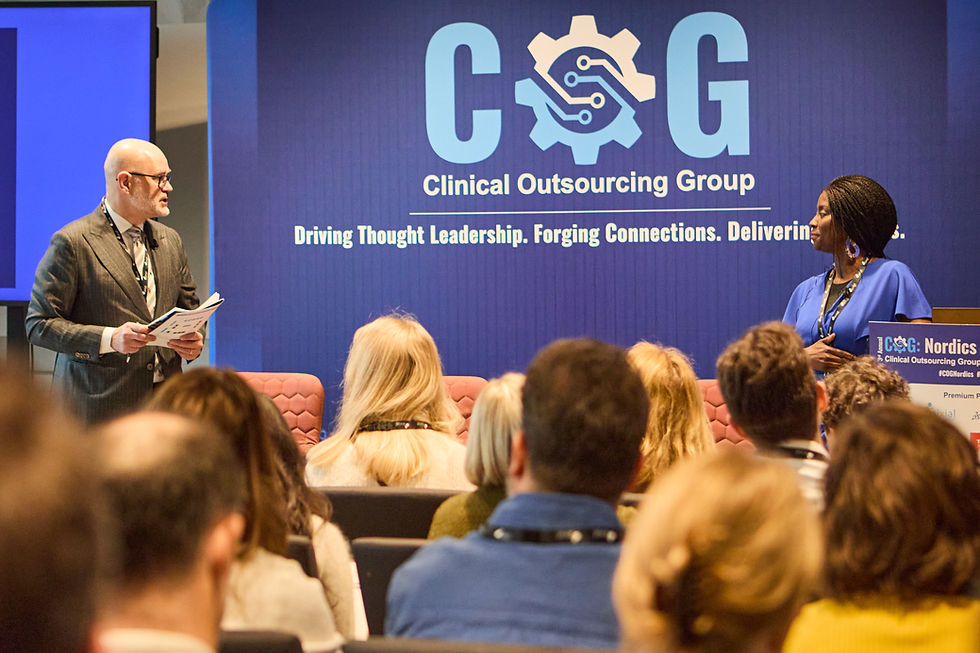
The conference opened with an inspiring keynote from Vivien Ibironke Ibiyemi (Chief Operating Officer, TEQCool), who set the tone with a rigorous examination of business case development for emerging biopharma. Vivien argued that a compelling business case is far more than a fundraising instrument... it is the strategic architecture that aligns scientific vision with commercial reality, guides resource allocation, and establishes credibility with investors, key opinion leaders, and clinical partners. She outlined frameworks for constructing business cases that resonate across diverse stakeholder audiences, covering market analysis, competitive positioning, and development timeline projections that balance ambition with credibility, while emphasising the compounding value of a well-cultivated industry executive network.
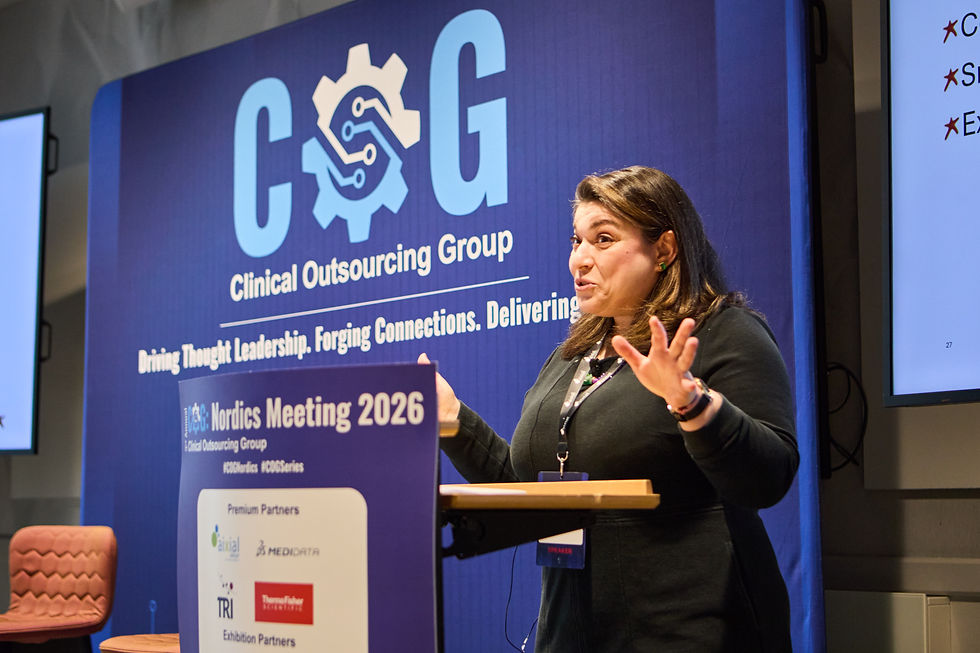
Judit Heiczinger (Director, Strategic Development & Delivery, Aixial Group) delivered the second keynote of the morning, examining the rapidly expanding role of artificial intelligence in clinical research. Judit drew a clear distinction between AI's established role in documentation and data analytics and its emerging function as a diagnostic actor, but one capable of supporting, and in some contexts potentially replacing, human evaluation in both healthcare practice and clinical trials. She examined the regulatory landscape governing AI diagnostics, the operational implications for sponsors and CROs, and the risks that must be proactively managed as AI becomes integrated into evidence generation processes.
Kristine Bäck (Director of Project Management, Nanexa) brought a practitioner's perspective to the question of geography in early development, presenting the case for Sweden as a Phase 1 destination. Drawing on Nanexa's own trial experience, Kristine outlined the practical advantages of conducting Phase 1 studies in Sweden: streamlined regulatory submission timelines through the Swedish Medical Products Agency, high-quality academic medical centre capabilities, and a research-engaged patient population that supports efficient recruitment. Her session drew direct comparisons with conducting equivalent studies in Germany, offering delegates a grounded basis for geographic decision-making.

Alina Cojocaru (Senior Account Manager, Pharma Services Group, Thermo Fisher Scientific) closed the morning's strategic block with a keynote on clinical supply chain resilience. In a period defined by regulatory change, geopolitical pressure, and increasing operational complexity, Alina examined how confidence in clinical supply is established through stable infrastructure, end-to-end supply control, and globally distributed networks. She addressed practical approaches to managing trade, tariff, and compliance risks through proactive planning and regional operating models, and explored how applied AI and automation are improving quality and reliability across the supply chain while maintaining the regulatory control essential for confident trial execution.
Partnership Strategy
The post-break session focused on vendor relationships and trial management models. A keynote panel on strategic CRO and vendor partnerships featured Mads Kjolby (Chief Medical Officer, Vesper Bio) and Helen Blanco (Consultant, Blanco Consulting), who outlined systematic approaches to vendor evaluation that balance cost with quality. The discussion moved beyond standard pricing criteria to explore cultural fit, communication protocols, and scalability... factors that determine whether vendor relationships can evolve with organisational growth and changing stakeholder expectations. The session generated lively audience exchange on how lean biopharma organisations can negotiate effectively and build partnerships that deliver genuine operational flexibility.

Kirsten McAulay (RBQM Operations Manager, TRI) addressed a persistent gap in early phase research: the inconsistent application of Risk-Based Quality Management. Kirsten argued that RBQM is arguably more important in early phase studies than in any other context, yet in practice, application remains highly variable — frequently relying on manual processes and individual judgement rather than structured, technology-supported frameworks. Her session provided attendees with a roadmap for implementing rigorous RBQM strategies, with actionable insights on improving visibility into monitoring activity, driving efficiency without rigidity, and enabling better decision-making across diverse early phase study designs.
Antonio Bermejo Gómez (Chief Development Officer, Synartro) delivered one of the morning's most candid sessions, sharing Synartro's real-world approach to conducting clinical trials without traditional full-service CRO support. Antonio presented direct trial management as a high-risk, high-reward strategy, detailing the essential internal capabilities required, the technology platforms that enable lean operations, and the strategic use of functional service providers for specialised tasks. He was frank about the operational challenges — including site relationship management, monitoring logistics, and safety reporting with limited personnel — while making a compelling case for the strategic advantages: real-time data visibility, faster decision-making, closer investigator relationships, and the ability to pivot quickly.

Technology Strategy
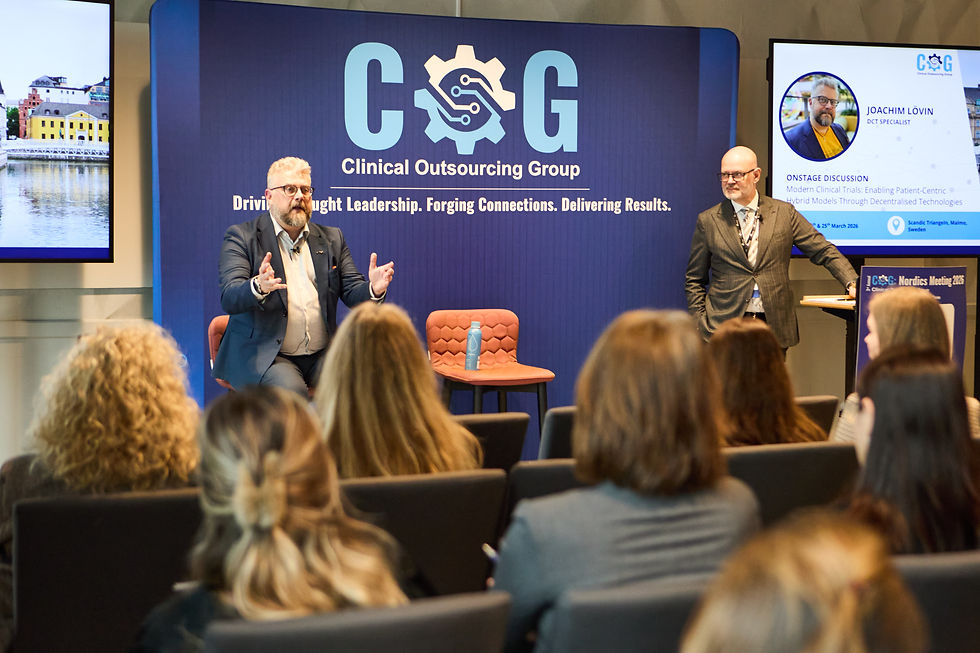
Joachim Lövin (Former DCT Specialist, Novo Nordisk) opened the afternoon with an examination of decentralised clinical trial technologies and how emerging sponsors can harness them to create genuine hybrid trial models. Joachim focused on the misalignment that frequently exists between sponsors, technology vendors, and patient expectations around DCT implementation, and explored practical approaches to "bring your own device" (BYOD) strategies, wearable integration, and remote data capture. His session emphasised the importance of pragmatic technology strategy and proactive planning over ambition, offering a framework for hybrid models that genuinely serve all stakeholders without overcomplicating operations.
Michael Tucker (VP Patient Experience, Medidata Solutions) examined the evolving role of eCOA within the broader clinical technology ecosystem. His keynote challenged the framing of eCOA as an isolated function, arguing that the most successful trials are those that harmonise patient experience with a robust, scalable data backbone. Michael discussed how integrated architecture eliminates data fragmentation, streamlines audit readiness, and delivers a comprehensive view of study performance — while remaining grounded in patient usability. He explored how a connected ecosystem enables patient data to be captured efficiently and made immediately impactful across the entire data strategy.

Trial Set-Up & Execution
Hilda Ahnstedt (Program Officer, European Research, Breakthrough T1D) presented Breakthrough T1D's distinctive funding model for European type 1 diabetes research, combining policy engagement, collaborative partnership frameworks, and diverse funding mechanisms to accelerate therapeutic development. Hilda outlined the organisation's research strategy, funding priorities, and involvement in initiatives including Horizon Europe, and highlighted examples of successful collaborative models spanning discovery through clinical trials. Her session explored the organisation's unique role in bridging patient advocacy, policy engagement, and research funding — offering practical guidance for investigators and organisations seeking to align their proposals with Breakthrough T1D's strategic mission.
Lindsay Davies (Chief Scientific Officer, NextCell Pharma) opened the afternoon's final block with an examination of quality control programme development for early-stage biotech companies entering clinical trials. Lindsay outlined the essential components of fit-for-purpose QC programmes for early clinical development, covering testing requirements for IND and CTA submissions, stability programme design, and release testing strategies. She made a particular case for the strategic advantages of Nordic-based manufacturing and QC infrastructure — especially for short shelf-life biological products, where local production eliminates import delays, cold chain risks, and regulatory complications while enabling rapid testing turnaround.
Day One's formal programme concluded with an interactive workshop on patient recruitment and site engagement, led by Nadia Peppa (Clinical Operations Manager, Specialist, Lundbeck). The session addressed one of clinical research's most persistent operational challenges, focusing on practical experience from the field rather than theoretical frameworks. Participants examined how early site engagement influences recruitment outcomes, the common barriers that lead to enrolment delays, and practical approaches that have demonstrated impact in real-world settings. The workshop format — encouraging participants to share experiences, challenge assumptions, and exchange ideas — generated a level of honest peer exchange that drew consistently positive feedback throughout the evening networking reception.
Clinical Operations Strategy
Helen Blanco (Consultant, Blanco Consulting) opened the second day with what many delegates later described as one of the summit's most practically valuable sessions. Her keynote on managing clinical trial crises drew on candid case experience to examine how sponsors and CROs can better anticipate common failure points and respond effectively when critical issues emerge. Helen shared perspectives on studies that encountered significant challenges; enrolment shortfalls, site performance problems, data quality concerns, and unexpected safety signals, examining how emerging problems were identified, how difficult decisions were made under pressure, and how rescue strategies were implemented to salvage critical data and timelines. Her session equipped attendees with a framework for distinguishing recoverable situations from those requiring more fundamental interventions.
Helen's presentation was immediately followed by an interactive workshop — the "Rescue Room" — facilitated by Helen & Sverre. Delegates broke into four groups, each tasked with diagnosing a real-world crisis scenario drawn from the kinds of challenges Helen had described. Groups were asked to identify the earliest warning signs that should have triggered action, and to agree on a practical recovery plan, including stakeholder communication strategy. After twenty minutes of group deliberation, each team presented their scenario and proposed rescue strategy to the full room. The session was frank and energetic, with the explicit acknowledgement that there are no perfect answers.

Kristina Holmberg (Head of Clinical Biomarkers, Lundbeck) led a fireside chat examining the strategic considerations underpinning successful biomarker integration in clinical development. Her session addressed the tension between exploratory and confirmatory biomarker approaches, practical challenges in sample logistics and data interpretation, and the decision frameworks that help organisations determine when biomarkers add genuine value versus introducing unnecessary complexity. Kristina explored how early-stage biomarker validation decisions, laboratory partner capabilities, and regulatory pathway implications shape development programmes... offering delegates a framework for navigating the evolving biomarker landscape with realistic expectations and strategic clarity.
Vendor Oversight
Adam Robertson (Chief Scientific Officer, Hemispherian) shared firsthand experience of navigating IND preparation and submission for Hemispherian's inaugural US Phase 1 trials. Adam's session covered pre-IND meeting strategies, common CMC pitfalls, and FDA feedback management for novel mechanisms — offering a candid account that complemented the more abstract guidance available in regulatory documentation. He examined academic site selection criteria beyond scientific reputation, including institutional review board efficiency, Phase 1 unit capabilities, and strategies for building productive investigator relationships that balance academic publication interests with sponsor timeline pressures and data quality requirements.

Dr Mbunya S Misiani (Global Patient Advocate) brought a perspective that distinguished his session from the operational and regulatory content that preceded it. Speaking from extensive experience in African healthcare and research contexts, Mbunya examined how authentic patient engagement in Africa extends well beyond traditional consent processes to encompass meaningful community involvement, healthcare infrastructure development, and equitable access to innovative therapies. His fireside chat explored post-trial access commitments, trust-building within historically underrepresented communities, and practical approaches to help sponsors understand how thoughtful patient partnership and sustained healthcare investment create both operational advantages and meaningful legacy.
Runhild Gammelsaeter (Medical Director, Arctic Bioscience) examined effective vendor oversight in complex multi-regional trials from the perspective of a sponsor with direct experience managing Phase 2b studies across five countries and more than sixty sites. Runhild challenged the tendency for vendor oversight to default to transactional monitoring and reactive issue management, presenting instead a proactive framework that transforms supplier relationships into genuine partnerships. Her session covered techniques for establishing meaningful KPIs that drive sponsor objectives at both site and country level, implementing communication frameworks that identify and resolve regional issues before they impact timelines, and fostering collaborative problem-solving approaches that strengthen partnership value throughout the trial lifecycle.

Lastly, Siri Kolle (VP Clinical, Inven2) examined Norway's evolving position as a clinical research destination, presenting the case for a country whose government-backed investment and regulatory development are creating compelling opportunities for international biopharma sponsors. Siri explored how Norway's integrated healthcare data systems, patient registry access, and clinical expertise combine with forthcoming regulatory streamlining to enhance trial execution. She discussed the Norwegian government's 10-year action plan and its strategic commitment to attracting biopharma investment, anticipated approval timeline improvements, and the unique competitive advantages that make Norway an increasingly attractive destination for efficient, high-quality trial delivery.
Audience Breakdown
COG Nordics 2026 welcomed a senior and highly engaged audience of C-suite leaders, VPs, Directors, and senior management spanning emerging and established biopharma, public health, academics, and the full spectrum of clinical development service providers.


COG Nordics brings together leaders from across Northern Europe's clinical research ecosystem to advance operational excellence and strategic innovation in clinical trial delivery.
Find out more: https://www.thepbcgroup.com/cog-nordics


Comments