COG Europe 2025 Meeting Review
COG Europe 2025 Meeting Review
Clinical Outsourcing Group (COG) Europe 2025 was held at the Novotel Amsterdam City on 18th–19th November 2025. The meeting brought together senior leaders and operational experts across Europe’s life sciences to tackle pressing and current challenges affecting clinical trial execution. Across two days of keynotes, panel discussions, deep-dive case studies, and Q+A sessions, attendees gained valuable insight in topics included but not limited to: the shifting EU regulatory landscape, the rising complexity of vendor oversight and the evolution of the role of AI in clinical trials.
Hosted by the PBC Group, aided with the knowledge of our industry expert speakers, COG Europe 2025 delivered clear, concrete advice regarding how trial sponsors and all organisations involved in clinical development can enhance clinical quality, strengthen partnerships, source funding for clinical trials and future-proof their processes and operations.

Clinical Operations & Outsourcing
Day 1 opened with a series of high-impact keynotes focused on the future of European clinical trial execution. Nurcan Coskun in her opening keynote “Leadership Insights: The Future of European Trial Execution” broke down current trials and tribulations in the European trial space: the decline of Europe’s clinical trials market presence, and how ACT EU and the popularity of decentralized/hybrid trials are affecting the EU’s future in clinical development. Nurcan explained the difficulties of the present, and looking to the future, called for a central trial process that all EU countries should subscribe to, improving multi-national clinical trial collaboration and setting Europe back up for success.

Judit Heiczinger (Aixial Group) followed with “Outsourcing vs Insourcing: Drivers of the Changing Strategy,” exploring the topic of when/what to outsource vs insource, and to whom? Looking at the preferred methods of the past, Judit explored how modern trends demonstrate a return to older, more conservative attitudes from sponsors when outsourcing, and called for CROs to pursue deeper strategic alignment and more transparent partnership models, explaining that a cultural and structural fit between sponsors and CRO’s remain of critical importance.
Bart Scheerder (Chair, DCRF) put the Netherlands in the spotlight in his keynote “From Amsterdam to Excellence…” answering the question of how best to organise your clinical trial in the Netherlands, covering the USP’s the Netherlands has, and how the future is looking bright with the introduction of the Nationaal Actieplan Klinisch Onderzoek (National Action Plan Clinical Research). His session outlined how ACT EU has been designed to address key pain points in European clinical trial execution, and how these policies weave with those from the NAPCR, which aim to reduce start up time for trials from >150 days to <50 days alongside other positive ambitions.

Antony Davison (Thermo Fisher Scientific) concluded the morning with his keynote covering new advances in digital enablement’s and how they are paving the way for clinical trial innovation, detailing how digital tools are improving patient’s access to current and post-trial information, reducing waste, and simplifying operational scalability across increasingly complex supply chains.
Real Word Data-Driven Methodologies
From here our sessions shifted toward emerging real word data-driven methodologies. In the panel “Transforming Clinical Trials with RWE and RWD,” which included expert advice from Liesbeth Hof (AM-Pharma), Manan Trivedi (UCB), and Roger Legtenberg (admedicum), their discussion highlighted regulatory acceptance gaps, data integration hurdles, and pragmatic approaches for sponsors aiming to embed RWE strategies without compromising scientific integrity.

Henrik Blombergsson (Viedoc) and Hedda Magnusson (LINK Medical) presented a deep dive into Trialgateway, a scalable, compliant, and patient-friendly platform for digital studies, breaking down their successes, the story of Trialgateway’s origin and their ambitions to simplify the patient recruitment process which will improve the accessibility of post-trial information for patients.
Manan Trivedi (UCB) delivered a focused session on EU CTR submission, asking the question of what did our audience consider to be the biggest operational challenges for EU CTR implementation, and how UCB aim to address these challenges by resolving RFI management challenges and ensuring your EU CTR submission runs smoothly as the process becomes increasingly challenging.
Clinical Outsourcing Partnerships
Heike Schoen (Lumis International) rounded out the late morning with a presentation on global outsourcing diversification, addressing how geopolitical tensions, cost shifts, and the need for diverse patient populations are driving sponsors toward more geographically distributed outsourcing strategies and what this means for the industry.

Our afternoon kicked off with an interactive panel featuring Thomas Thunnissen (Leyden Labs), Jurate Lasiene (NorthSea Therapeutics), Christopher Kata (TrialStat), and Caroline Eilering which explored “The Million Euro Question: Should You Partner with a Large CRO, Specialist CRO, or FSP?” Our speakers compared the flexibility of niche CROs with the scalability and integrated capabilities of larger providers, breaking down the exact benefits and drawbacks of each CRO model, and offering actionable advice to our audience regarding their individual CRO requirements.

Thierry Schulmann (Sumitomo Pharma) followed with “From Identification to Innovation: Leveraging Key Opinion Leaders in Clinical Research Strategy and Execution,” which broke down not only want KOLs offer when researching and conducting your clinical trial, but how the opinions and insights KOLs can provide can be your secret weapon to keep your trial from avoiding avoidable pitfalls and keep you on the road to approval.
Next, we had Kento Nakamura (CMIC Group) who broadened our discussions to beyond Europe, offering an international perspective with “Asia Pacific Clinical Trials Beyond China…”. Kento broke down the need-to-information about performing clinical trials in the APAC, the logistical and regulatory requirements of individual countries within this region and explored which countries with their specific regulatory requirements are the ones to keep in mind when considering APAC clinical trials.
Leadership Insights
The Salvius Legal team delivered a high-value session on navigating site and vendor contract strategy, unpacking how planning, negotiation leverage, and carefully structured agreements can prevent cost overruns and timeline drift, as well as advocating for the crucial roles contracts serve in clinical trials, explaining how contracts don’t receive as much consideration and value that they warrant, alongside covering the overreliance on AI that has emerged when drafting clinical trial contracts.

Day 1 of the meeting concluded with a C-Suite panel on clinical-stage investment challenges, featuring Ermir Kalaj (Cellula Therapeutics), Eric van der Putten (Modra Pharmaceuticals), Vincent Lit (AVIGI Therapeutics), Eric Halioua (CarKath), and Ivo Timmermans (Pleco Therapeutics). These CEO’s discussed the increasing scrutiny facing European biopharma, from public market readiness to Horizon Europe funding pathways, and shared candid insights on capital efficiency, investor expectations, the Catch-22 of investors always wanting more information than you currently can provide, and tips on how you can shape your case to make investors and the world listen to what your organisation has to say and offer.
Execution & Oversight
Day 2 opened with a focus on operational excellence and regulatory harmonisation across the EU.
Stan van Belkum (CCMO NL) delivered a compelling keynote on accelerating European trials, outlining how the future of clinical trials in the EU looks bright and there is still untapped potential, but to reach it, strong improvement is required for the CTR process, leveraging the BIOTECH ACT, and we need to employ better attention to process after CTR approval to reduce issues that arise from CTA, budget, negotiations and recruitment.
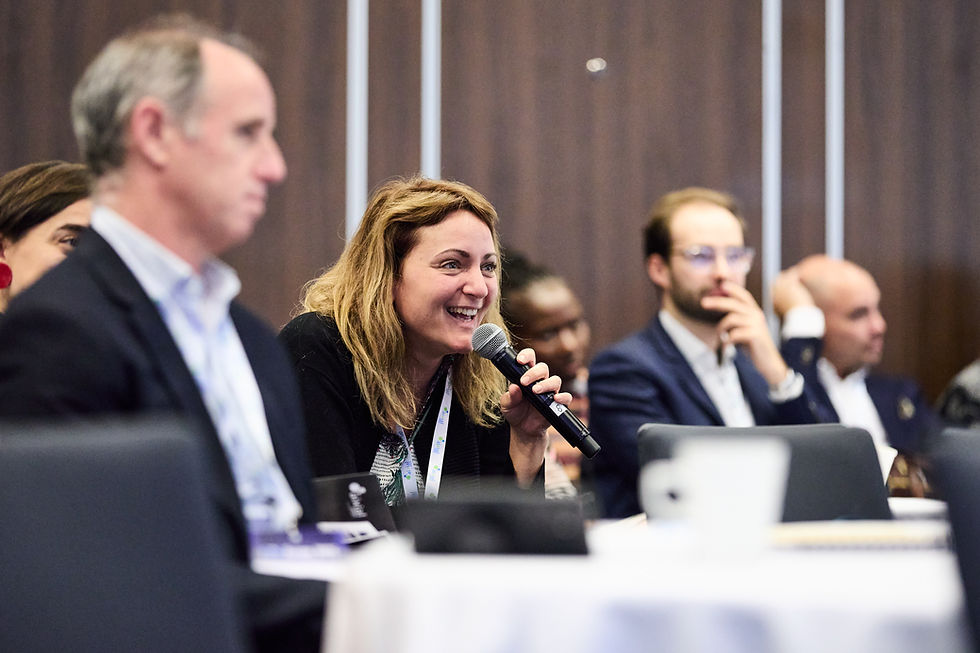
Martin Rodriguez (Sanofi) addressed the elephant in the room with his session “Integrating Cybersecurity into Service Provider Qualification,” highlighting that cybersecurity is now a core GxP requirement and must be embedded into vendor selection, due diligence, and oversight frameworks. Cybersecurity is not just an afterthought to consider when conducting your trial, it is the vital shield that if not deployed in an efficient and well-defended manner, can compromise your trial and wider operations.
This was followed by a keynote interview with David Glynn (Shionogi), who discussed clinical supply chain performance and oversight. Here, David provided sponsor-side clarity on accountability frameworks, communication standards, and the capabilities required from high-performing supply vendors.

In Maria Expósito Lorido (VU Venture Partners)’s presentation “From Outsourcing to Orchestrating: The Clinical Mesh Playbook”, Maria examines the strengths and drawbacks of both the flagship pioneering and the big pharma R&D model, the results from clinical trials that employed a clinical mesh of these models, and explained that the results of these trials indicate that the key to a strong clinical is not to have more vendors, but better-fitted capabilities on a shared backbone, with the same QMS and safety governance.

Jurate Lasiene (NorthSea Therapeutics) delivered a rare disease case study on first-in-human trial execution, outlining recruitment strategies, CRO partnership models, and key practices they performed that enabled their team to overcome enrolment challenges and launch a successful early-phase program.

Liesbeth Hof (AM-Pharma) followed with “Managing the Vendor Ecosystem: Multi-Vendor Oversight” which addressed governance frameworks, communication pathways, and unified quality metrics that have helped her teams maintain seamless collaboration across diverse service providers.
Navigating the Future
In the afternoon of Day 2, Barbara Kelly Bryer (Deilf) presented “From Bench to Bedside: Managing Human Transitions Across Clinical Development Stages” highlighting the importance of workforce planning, skill-gap forecasting, and targeted hiring strategies throughout the development lifecycle. Barbara’s advice was of particular value for companies transitioning from preclinical to first-in-human stages, and through Barbara’s own experience, she offered strong advice and guidance on how to best manage human transition and interaction.

Catherine Cowell and Priyanka Kiritharan (Cancer Research UK) provided a UK-focused perspective on early phase clinical trial delivery, showcasing how infrastructure investment, coordinated trial identification systems, and multi-site collaboration can improve recruitment efficiency and ensure equitable patient access for UK citizens, alongside how the approaches and structured they used can serve as inspiration for early phase trial delivery for EU biotech’s.
The summit closed with the “COG Europe 2025: Looking Ahead – Trends and Opportunities Panel Discussion”, where speakers from across the two days participated in an open Q&A exploring the next 12 months of European trial innovation, from regulatory shifts to digital clinical models, RWE integration, the rising expectations placed on sponsor-vendor relationships and the key takeaways we learned at COG Europe 2025 as we look to 2026.
A Senior Audience Driving European Clinical Excellence
COG Europe 2025 welcomed senior highly engaged audience composed of C-suite industry leaders (22%), VP’s Director’s and Heads of within biotech’s (50%) and senior management (28%). Featuring strong participation from both emerging biotech’s and established global biopharma, the summit succeeded in offering a unique platform for cross-regional collaboration, shared problem-solving, and forward-looking strategy development.

COG Europe will return in 2026. Register now to receive updates.


